OLT(241860295) 10:58:43 AW-759006566 OLT(241860295) 10:58:49

News

Home /News /

Working Principle and Advantages of Internal Mixers

hot products

LATEST NEWS

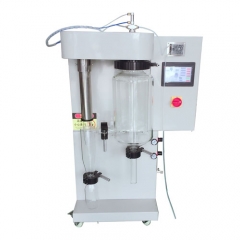
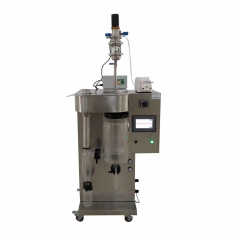
Better Process Control Helps Researchers Improve Spray Drying Results

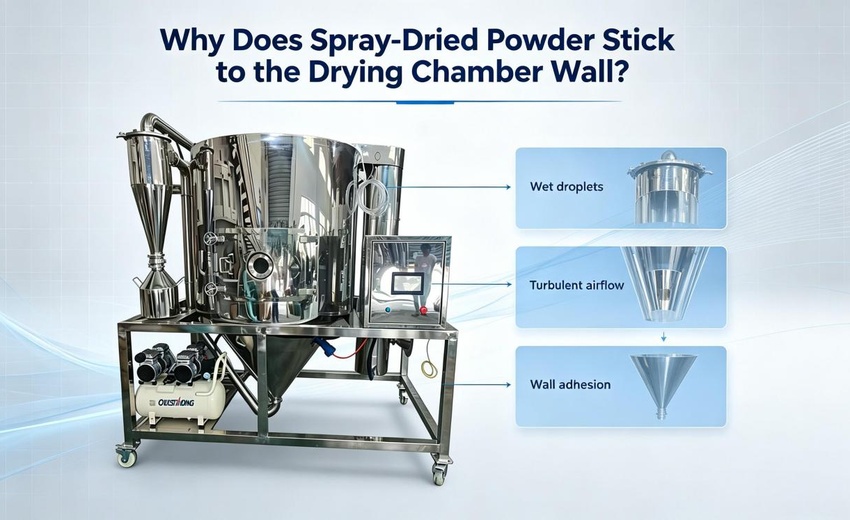
Better Process Control Helps Researchers Improve Spray Drying Results

Aug / 17 / 2026

For researchers working with powders, achieving a consistent result is often more complicated than simply removing moisture from a liquid. The final p

The Core of Nanoscale Precision Cleaning: How Plasma Cleaning Machines Empower Upgrades in the Semiconductor and Electronics Industries

The Core of Nanoscale Precision Cleaning: How Plasma Cleaning Machines Empower Upgrades in the Semiconductor and Electronics Industries

Aug / 17 / 2026

In the fields of semiconductor, consumer electronics, and precision component manufacturing, surface cleanliness directly determines product yield, pe

Why Explosion-Proof Design Matters for Solvent Recovery Machines

Why Explosion-Proof Design Matters for Solvent Recovery Machines

Aug / 17 / 2026

Solvent recovery machines are widely used in industries where solvents are consumed in significant volumes—painting, printing, electronics, automotive

Working Principle and Advantages of Internal Mixers

Working Principle and Advantages of Internal Mixers

Aug / 17 / 2026

The internal mixer is a core fully enclosed, high-pressure, strong-shear intermittent mixing equipment for rubber, plastic and elastomer processing. F

Working Principle and Advantages of Internal Mixers

17 Aug, 2026

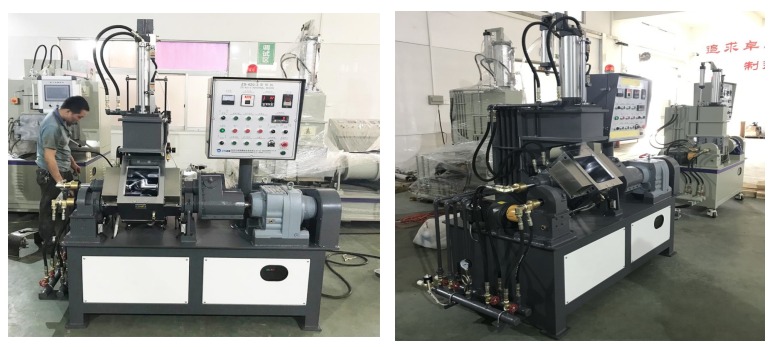
The internal mixer is a core fully enclosed, high-pressure, strong-shear intermittent mixing equipment for rubber, plastic and elastomer processing. Featuring differential-speed spiral rotors, floating weight pressurization and precise temperature control, it integrates polymer plasticating and compound mixing in one closed chamber. The equipment efficiently breaks down carbon black and additive agglomerations to achieve micron-level uniform filler dispersion, serving as essential front-end equipment for tires, plastic masterbatches and various rubber-plastic products.

Four-Stage Precision Mixing Process

  1. Dust-Free Closed Feeding: All raw materials are fed through the top hopper, and the floating weight tightly seals the mixing chamber. The fully enclosed structure eliminates powder flying for clean production, while constant pressure compacts materials to create a dense environment for efficient shear mixing.
  2. Differential Shear Dispersion: Counter-rotating rotors with speed differences generate intense shear force in narrow gaps between rotors and chamber walls. This powerful mechanical force shreds filler agglomerates and polymer lumps, realizing uniform micron-level dispersion of functional components in the polymer matrix.
  3. Kneading and Constant-Temperature Plasticization: The spiral rotor structure drives materials to circulate bidirectionally for continuous folding and kneading, ensuring overall homogeneous mixing. Friction heat and precise temperature control soften polymers, reduce viscosity and improve material plasticity. Eliminating manual material turning, it greatly lowers labor intensity and outperforms traditional open mills in efficiency and standardization.
  4. Intelligent Automatic Discharging: Real-time monitoring of mixing time, material temperature and motor torque enables accurate judgment of mixing completion. After pressure stops, the bottom gate opens automatically, and homogeneous compounds are discharged steadily for subsequent sheeting and cooling, guaranteeing consistent batch quality.

Core Industrial Advantages

Green and Eco-Friendly: Fully enclosed operation achieves zero powder overflow, optimizing workshop environments and complying with strict environmental standards.

Intelligent and Stable Production: One-click automatic program control standardizes key process parameters, reduces manual errors and operator dependence, and empowers intelligent, standardized upgrading for rubber and plastic manufacturing enterprises.